
Leak Detection in Thousand Oaks, CA
A water bill that jumped for no visible reason, a damp spot that never quite dries, a meter that keeps spinning with everything off - we find the actual source before anyone opens a wall or a slab.
- Electronic listening equipment
- No unnecessary digging or demolition
- Meter and pressure testing
- Same-day in most cases
How Leak Detection Works
When You Don't Know Where The Leak Is
Most leak detection calls start the same way: something is clearly wrong, but nobody can see where. The water bill went up and the water company says the meter is still turning even with everything in the house off. There's a warm or damp spot on the floor that doesn't match any fixture nearby. A ceiling or wall has a stain that keeps coming back after it dries. None of these tell you where the actual leak is on their own, which is exactly why guessing at a repair before finding the source wastes money and sometimes makes the damage worse.
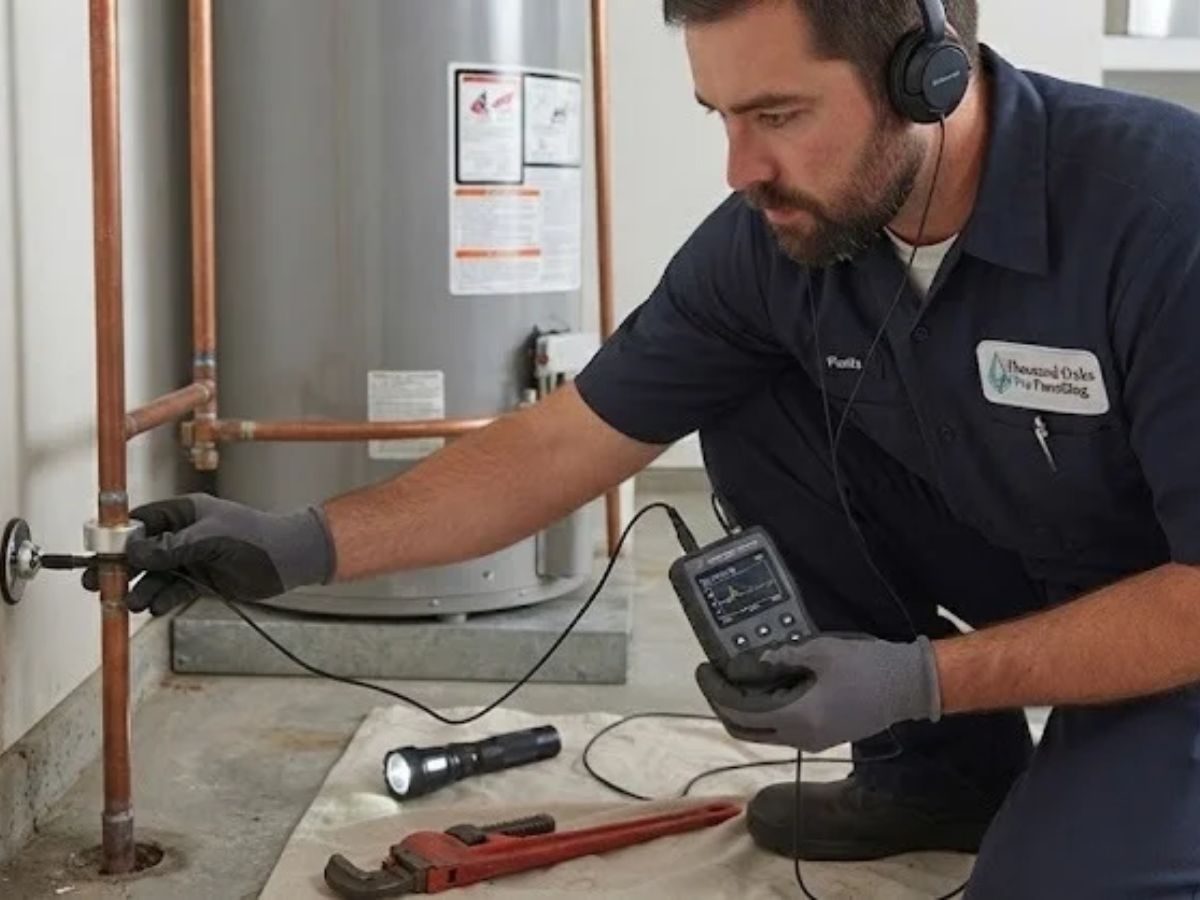
We start with a real diagnostic process, not a guess: acoustic listening equipment to trace the sound of pressurized water moving through pipe, pressure testing to isolate which line or zone is losing water, and a check of the meter itself to confirm whether the leak is on the house side or the utility side of the connection.
What The Diagnostic Actually Involves
For a suspected slab or underground leak, we use ground microphones and electronic listening devices to pinpoint the leak's location within a small, workable area before any concrete or flooring comes up - the equipment is what lets us avoid tearing up an entire floor to find a leak that's actually in one specific spot. For a wall or ceiling leak, we combine visual inspection with moisture meters and, where needed, thermal imaging to trace water that has traveled from its actual source before showing up somewhere else.
If the water bill is the only symptom and nothing is visibly wet anywhere, we start at the meter: shutting off the house's main valve and watching whether the meter continues to turn tells us within minutes whether there's an active leak on the property at all, before any invasive equipment comes out.
After We Find It
Once the leak is located, we give you a straight answer on what's actually involved in the repair - a copper pipe with a pinhole leak on an easily accessible run is a different job than a leak under a slab foundation, and the price and access method should reflect that real difference, not a generic flat number. If the leak turns out to be a slab leak specifically, see Slab Leak Detection & Repair for what that repair path looks like.
All repair work follows California Plumbing Code (UPC-based) standards for pipe material, joint method, and access requirements, whether the repair ends up being a simple fitting swap or a full section replacement.
Water Company Leaks Versus House-Side Leaks
It's worth knowing the line between what's your responsibility and what isn't: the water utility generally owns and maintains the line up to the meter, while everything from the meter into the house is the homeowner's. A meter test that shows the leak is on the utility side is worth reporting to the water company directly rather than paying for a private repair on a line that isn't yours to fix - we'll tell you clearly which side of that line the leak falls on once we've tested it.
"The meter is still turning and you don't know why. That's exactly what electronic leak detection is for."☎ Call (714) 750-8637
Pricing Reference
Actual price depends on the diagnosis. Call (714) 750-8637 for a flat quote on your job.
Where To Go From Here
If the diagnostic points to a leak under the concrete foundation, see Slab Leak Detection & Repair. If it points to the underground line between the meter and the house, see Water Line Repair & Replacement.
Questions We Hear Often
My water bill went up but I don't see any water anywhere. Could I still have a leak?
Yes - many real leaks are underground, inside a wall, or under a slab and never show up as visible water until they've been running for a while. A meter check with everything shut off is the fastest way to confirm whether one exists.
Will you have to tear up my floor or yard to find it?
Usually not to find it. Electronic listening and pressure testing narrow the location to a small area before anything gets opened up, which is the entire point of the diagnostic step.
How accurate is electronic leak detection really?
It narrows the leak to a workable area, not always an exact inch, but it's dramatically more precise than digging or opening walls based on a guess, and it's the same approach used industry-wide for exactly this reason.
Meter spinning and no idea why? A real diagnostic beats a guess every time - call and let's find it.☎ Call (714) 750-8637