
Water Damage Restoration in Thousand Oaks, CA
Standing water, a soaked ceiling, or a musty smell after a leak needs a fast, structured response, not guesswork. We extract water, dry the structure, and stop mold before it starts.
- Emergency water extraction
- Structural drying & monitoring
- Mold-prevention treatment
- Works directly with your insurer
What You Need To Know
What To Do Before We Arrive
If it's safe to do so: shut off the water source if you know where the valve is, shut off electricity to the affected area at the breaker if outlets or fixtures are near standing water (never step into standing water to reach a breaker), and move furniture, rugs, or belongings out of the wet area if you can do it without wading through water. Don't run a household fan or space heater into standing water, and don't attempt to remove wet drywall or flooring yourself before an inspection - that can spread contamination and make it harder to document the loss for insurance.
This Is Restoration, Not A Plumbing Repair
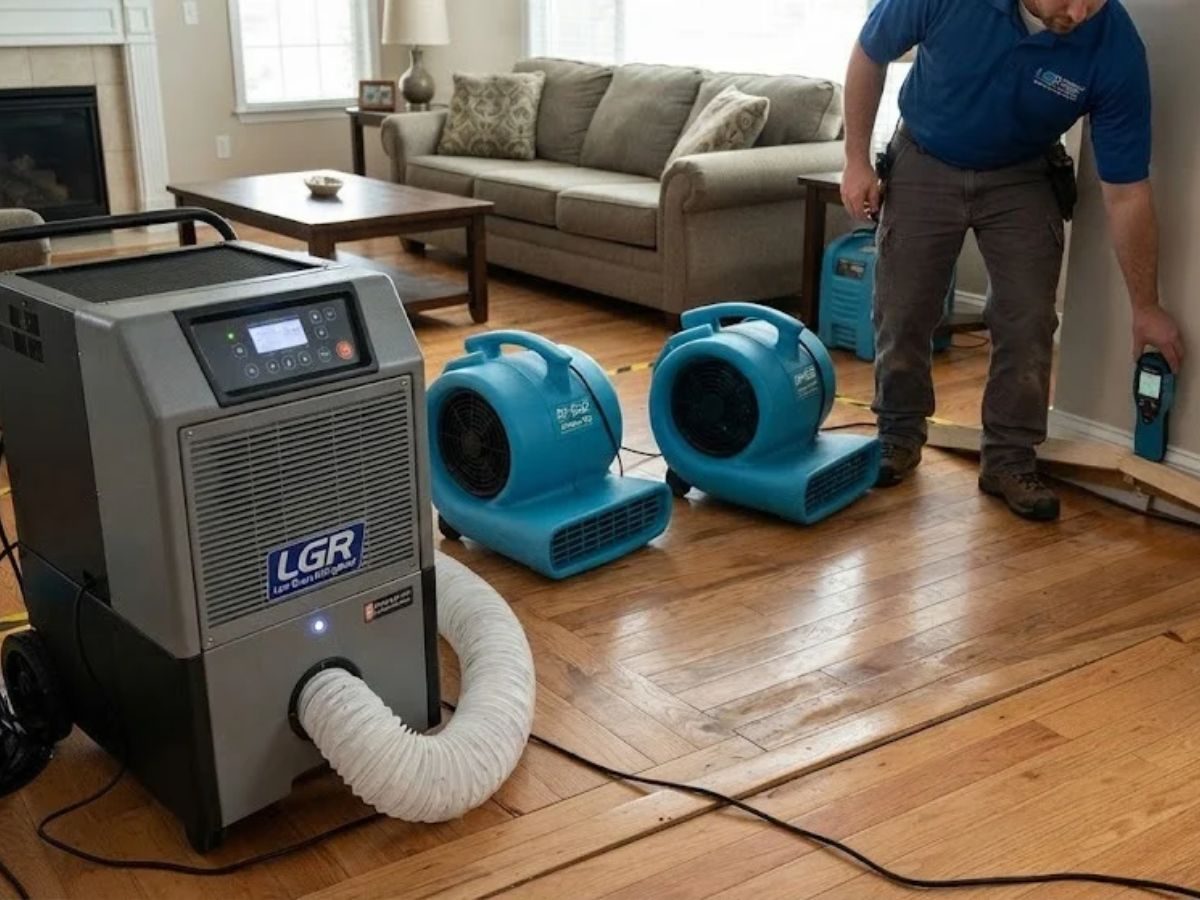
Water damage restoration is a different job than fixing the pipe, appliance, or roof that caused the water in the first place. If a supply line under your sink split and soaked the cabinet, a plumber repairs the line - but the wet drywall, saturated subfloor, and the mold risk that follows are a restoration job. We handle the cleanup, drying, and prevention side: extraction, structural drying with commercial dehumidifiers and air movers, moisture mapping to confirm the space is actually dry (not just dry to the touch), and antimicrobial treatment where standing water sat long enough to create a mold risk.
If you also need the pipe or fixture that caused the leak repaired, that's standard plumbing work at our regular number - we'll coordinate both so you're not managing two separate companies during an already stressful week. Our extraction and drying process follows the IICRC S500 standard for water damage restoration, the recognized industry reference for structural drying and moisture verification.
What Happens When You Call
A technician talks through what's actually happening - how much water, how long it's been sitting, and what's affected - before anyone drives out, so you know roughly what to expect. On site, the first priority is stopping any active water source and extracting standing water. From there we set up drying equipment sized to the actual affected area, not a one-size-fits-all fan-and-dehumidifier package, and we check back with moisture readings until the space is verified dry.
The Conejo Valley's clay-heavy soil and slab foundations mean a slow leak can travel further under flooring than it looks from the surface, so we check adjoining rooms and wall cavities rather than assuming the damage stops where the water is visible.
Insurance And Documentation
Most water damage claims move faster with clear documentation, so we photograph the affected areas, log moisture readings throughout the drying process, and provide a written scope you can hand to your insurance adjuster. We're not a public adjuster and we don't negotiate your claim for you, but the paper trail we build is the kind adjusters ask for.
Mold Risk And Timing
Mold growth on a wet building material generally becomes a real risk within 24 to 48 hours, which is part of why the extraction-and-drying window matters as much as it does. If you've had standing water for more than a day or two before calling, tell us that when you call - it changes how we approach the inspection, since drywall, insulation, and subfloor that stayed wet that long sometimes need to come out rather than just be dried in place.
We'll always tell you honestly when a material is salvageable through drying alone versus when removal is the safer, cheaper path in the long run - leaving compromised material in place to save a day of work now tends to cost more later.
"Every hour water sits is an hour closer to mold. Call and we start the clock the right direction."☎ Call (833) 521-1033
What It Costs
Actual price depends on the diagnosis. Call (833) 521-1033 for a flat quote on your job.
Related Services
If the cause was a burst pipe, slab leak, or water heater failure, those repairs are handled through our standard plumbing line rather than this restoration crew - see Burst Pipe Repair or Water Heater Repair for that side of the job.
Frequently Asked Questions
Is this the same as a plumbing repair?
No. Restoration is the cleanup, drying, and mold-prevention work after water damage. Repairing the pipe or appliance that caused it is a separate plumbing job, at our standard number, which we're happy to coordinate at the same time.
How fast can someone get here?
We dispatch 24/7 for active water damage. Response time depends on current call volume, but this line is monitored around the clock, not just during business hours.
Will my insurance cover this?
Many homeowner's policies cover sudden, accidental water damage. We document the loss thoroughly so you have what you need for your claim, but coverage decisions are between you and your insurer.
Water spreading right now? Every minute counts - call and we'll walk you through what to do while help is on the way.☎ Call (833) 521-1033