
Pool Leak Detection & Repair in Thousand Oaks, CA
A pool that's losing more water than evaporation explains needs a real diagnostic, not a guess and a patch - we find the source in the shell, plumbing, or equipment pad before recommending a fix.
- Pressure testing & dye testing
- Shell, plumbing, and equipment-pad leaks
- Minimizes deck and paver disruption
- Addresses Conejo Valley soil movement
The Detection Process
How Much Water Loss Is Normal
Pools lose some water to evaporation naturally, more in the hot, dry Conejo Valley summers than people often expect. A rough rule of thumb: losing more than about a quarter inch of water per day, consistently, is a signal worth investigating rather than assuming it's just the heat. Air bubbles in the return lines, difficulty keeping the pump primed, or chemical levels that won't stay balanced no matter how much you add are all signs pointing toward an actual leak rather than normal evaporation.
Why Conejo Valley Ground Movement Matters For Pools
The same expansive clay soil that stresses house foundations across this area affects pool plumbing and shells too - the ground swells in wet winters and contracts in dry summers, and on the area's sloped lots that movement is more pronounced. Over time that shifting can move buried plumbing lines or stress light niches and shell seams, which is a real, area-specific reason pool leaks show up here more than in some flatter, more stable-soil markets.
Finding The Leak Without Guessing
We use pressure testing to isolate whether the leak is in the plumbing lines versus the shell or equipment, and dye testing to visually confirm the exact point once we've narrowed the area - this combination lets us find the source without draining the pool unnecessarily or tearing up decking on a hunch. Once located, we'll tell you honestly whether it's a straightforward equipment-pad or plumbing fix, or a more involved shell repair, and price accordingly rather than defaulting to the most expensive path. Repairs follow standard pool industry practices and, where plumbing crosses into the home's water supply, California Plumbing Code (UPC-based) standards.
Equipment Pad Leaks
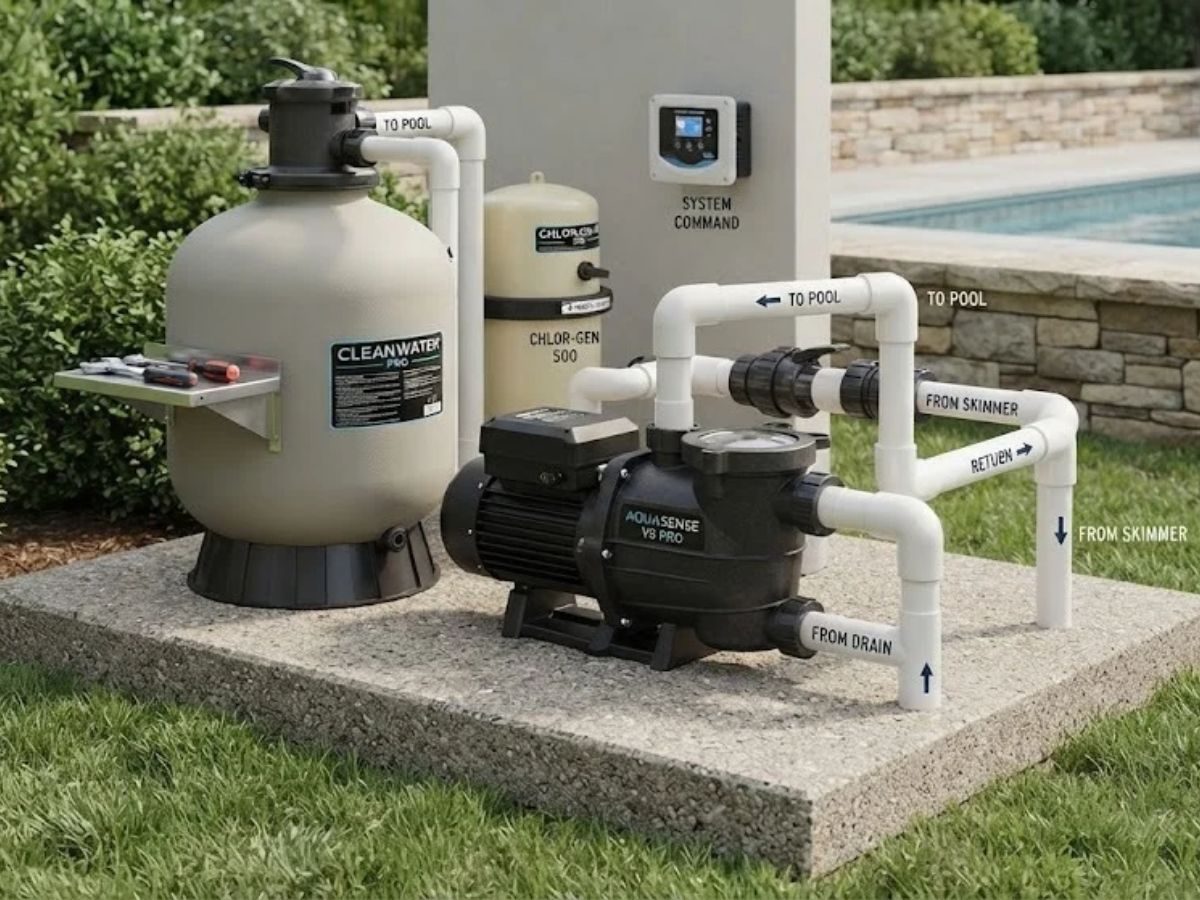
The equipment pad - pump, filter, heater, and the plumbing connecting them - is one of the most common places we actually find pool water loss, and often one of the easiest to repair once found, since it's all above ground and accessible. A cracked union fitting, a failed pump seal, or a loose connection at the filter can all cause steady water loss that looks, from the pool's perspective, exactly like a shell or underground leak until it's actually inspected.
Protecting Your Landscaping And Decking
We prioritize non-invasive detection methods specifically to protect pavers, decking, and landscaping around the pool - unnecessary excavation on a hunch can crack pavers, kill landscaping, and cost far more to restore than the leak repair itself. Where access is genuinely required, we'll explain exactly what needs to be disturbed and why before starting.
Seasonal Timing
Late spring through early fall is when most pool leaks get noticed, simply because that's when pools are used and filled most actively - but a leak that started over the winter can go unnoticed for months if the pool wasn't being checked regularly. If you're opening the pool for the season and the water level looks lower than you left it, that's worth a check before you assume it's just evaporation from sitting uncovered.
"Losing more than a quarter inch a day, consistently? That's worth a real diagnostic, not just topping it off."☎ Call (714) 750-8637
What It Runs
Actual price depends on the diagnosis. Call (714) 750-8637 for a flat quote on your job.
Also Worth Checking
If the leak turns out to be in the yard's main water line rather than the pool system itself, see Leak Detection for that broader diagnostic.
Pool Owners Often Ask
How do I know if it's just evaporation?
Mark the water level with tape and check it against a bucket of water left nearby over the same period - if the pool drops noticeably faster than the bucket, that's a real leak signal, not just heat.
Will you have to drain my pool to find the leak?
Usually not, or only partially - pressure and dye testing are designed specifically to avoid unnecessary draining.
Can a leak damage my yard or foundation if I wait?
Yes, over time - especially on sloped lots, a chronic pool leak can erode supporting soil and affect nearby structures, which is part of why we recommend addressing a confirmed leak rather than just refilling indefinitely.
Pool dropping faster than the heat explains? Let's find out where it's actually going - call and we'll diagnose it properly.☎ Call (714) 750-8637