
Slab Leak Detection & Repair in Thousand Oaks, CA
Water coming up under your floorboards, a warm patch on the slab, or a spike in your water bill with no visible cause - a slab leak needs to be located precisely before any concrete comes up.
- Acoustic + electronic detection
- Minimizes concrete removal
- Reroute or spot-repair options
- Common in Conejo Valley's clay soil
What A Slab Leak Involves
Why Slab Leaks Happen Here
Much of Thousand Oaks and the wider Conejo Valley sits on expansive clay soil that swells when wet and contracts in the long dry summer, and homes on sloped lots see that movement even more. That soil movement puts real mechanical stress on the copper or galvanized supply lines running under a slab foundation, and over years it's a genuine contributor to the pinhole leaks and joint failures that show up as slab leaks in this area - not just a generic aging-pipe story.
The signs vary: a warm spot on the floor (from a leaking hot water line), water pooling at the edge of the slab near a garage or foundation line, an unexplained spike in the water bill, or the sound of running water when every fixture is off.
Finding It Before Opening Anything Up
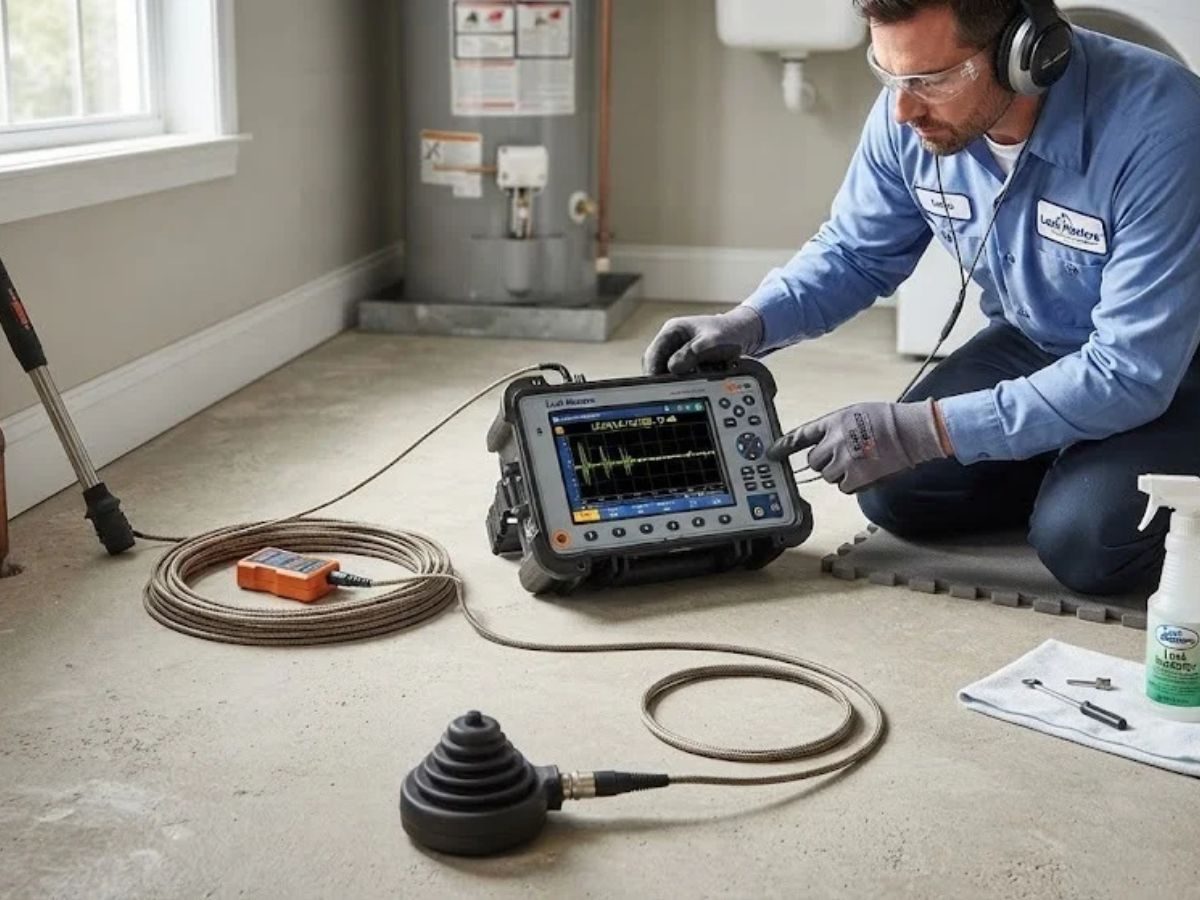
We use acoustic listening equipment and electronic line tracing to narrow the leak's location to a small, specific area of the slab before any concrete comes up. This matters because a slab leak repair done without proper detection means guessing where to break concrete, sometimes multiple times, which is far more disruptive and expensive than getting it right the first time.
Repair Options: Spot Repair Vs. Reroute
Once located, there are usually two paths: a direct spot repair, accessing the specific section of pipe through the slab and repairing or replacing that segment, or a reroute, running new supply line through the attic or along an exterior wall to bypass the damaged slab section entirely rather than breaking concrete at all. Which makes sense depends on the pipe's overall condition, its age, and whether this is an isolated failure or a sign of broader corrosion throughout the home's supply lines - we'll walk through both honestly rather than defaulting to whichever is more profitable. Every repair follows California Plumbing Code (UPC-based) requirements for slab penetration, pipe material, and pressure testing before the area is closed back up.
What To Do Before We Arrive
If you can locate the main shutoff valve, turning it off stops the leak from continuing to run while you wait, especially important if the leak is on the hot side and a water heater is actively trying to reheat lost water. Do not attempt to open the slab yourself to inspect or access the leak - without proper detection equipment, that risks cutting into the wrong section of pipe or other buried utility lines, and makes accurate detection harder once concrete has already been disturbed.
A Note On Multiple Leaks
Copper supply lines that have started failing in one spot due to age or soil-movement stress sometimes fail again elsewhere within a year or two, especially in homes with the same pipe material and installation age throughout. If this is your second slab leak in a relatively short period, that's worth a broader conversation about a full repipe rather than treating each leak as a fully isolated event.
"Warm spot on the floor near the garage? That's a real slab leak signal - worth a same-day look."☎ Call (714) 750-8637
Price Reference
Actual price depends on the diagnosis. Call (714) 750-8637 for a flat quote on your job.
See Also
If the detection process points to a leak in the yard or the line between the meter and the house rather than under the slab itself, see Leak Detection for that broader diagnostic picture.
Frequent Questions
How do I know if it's a slab leak versus some other kind of leak?
A warm patch on the floor, water at the edge of the slab, or a rising water bill with no visible cause are the classic signs - but the only way to confirm is detection equipment, since the symptoms can overlap with other leak types.
Is spot repair always cheaper than reroute?
Usually yes upfront, but not always the better long-term choice if the pipe is old and likely to fail again elsewhere. We'll lay out the real tradeoff for your specific situation.
Will insurance cover a slab leak?
Some homeowner's policies cover the water damage caused by a sudden slab leak, though coverage for the pipe repair itself varies by policy - that's a conversation with your insurer, but we document the failure thoroughly if you need it for a claim.
Water bill spiked and you can't find why? Slab leaks are exactly the kind of thing electronic detection is built for.☎ Call (714) 750-8637